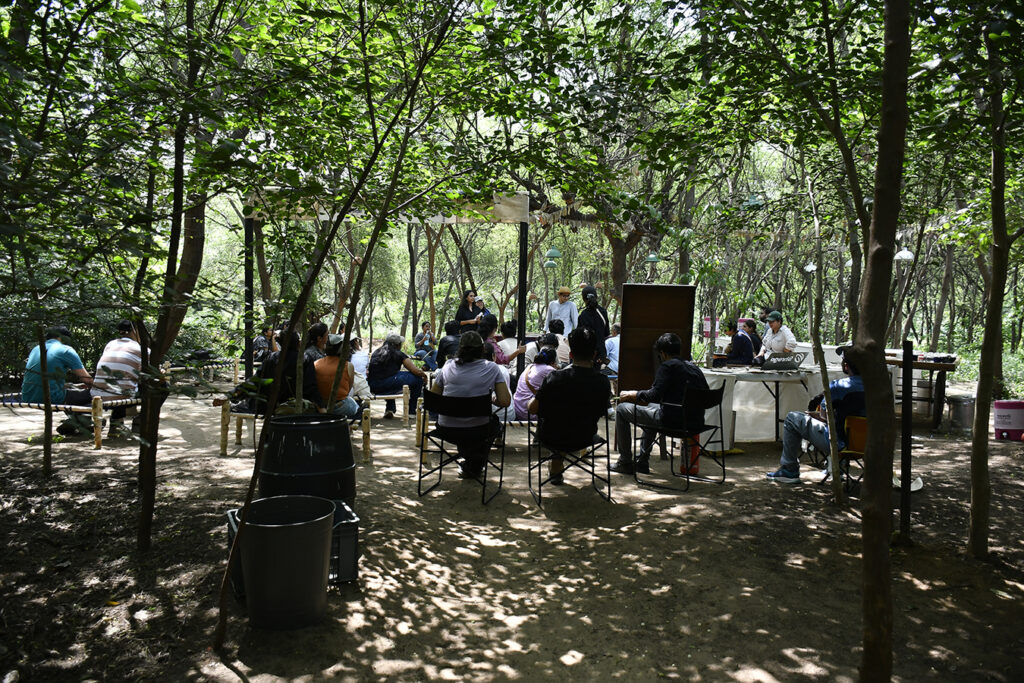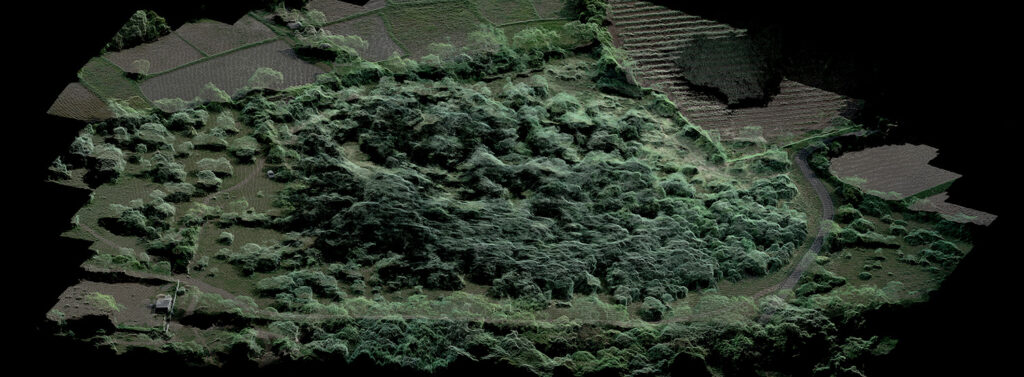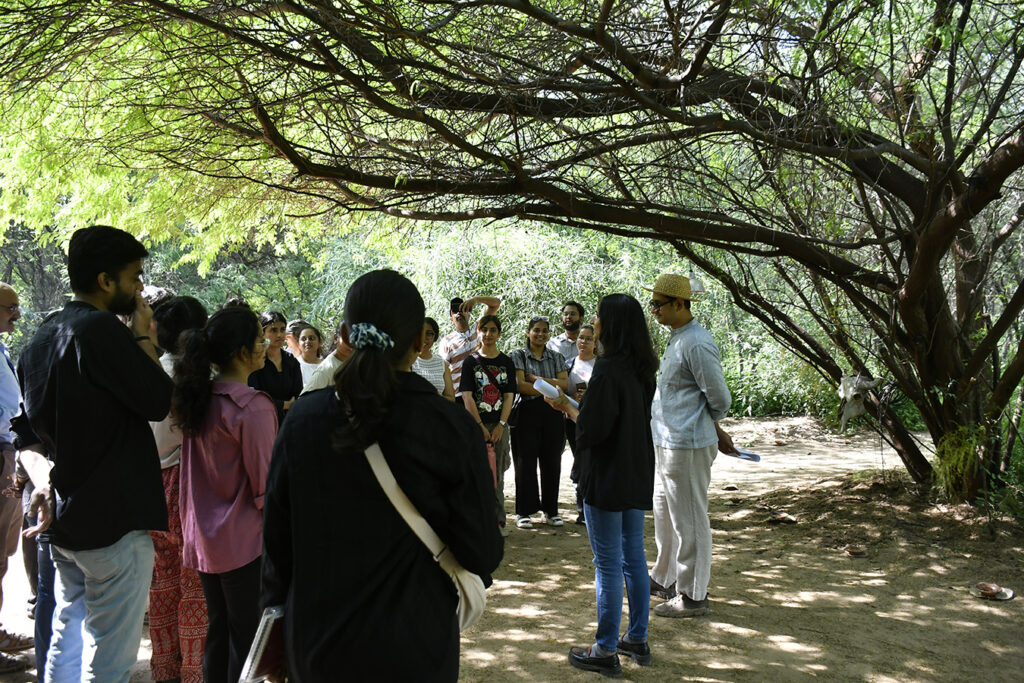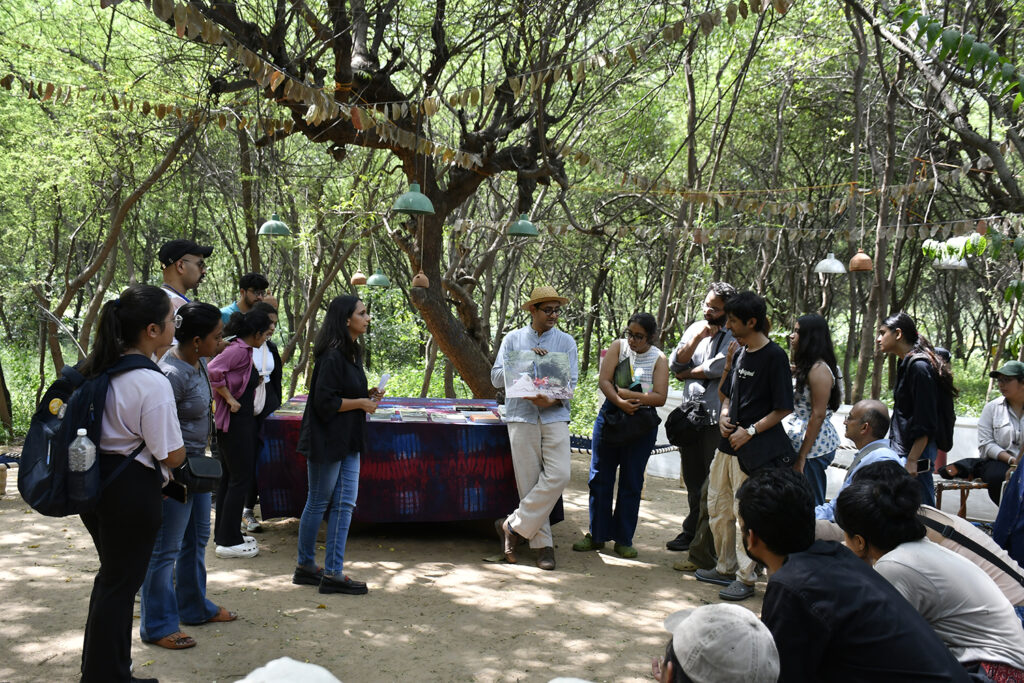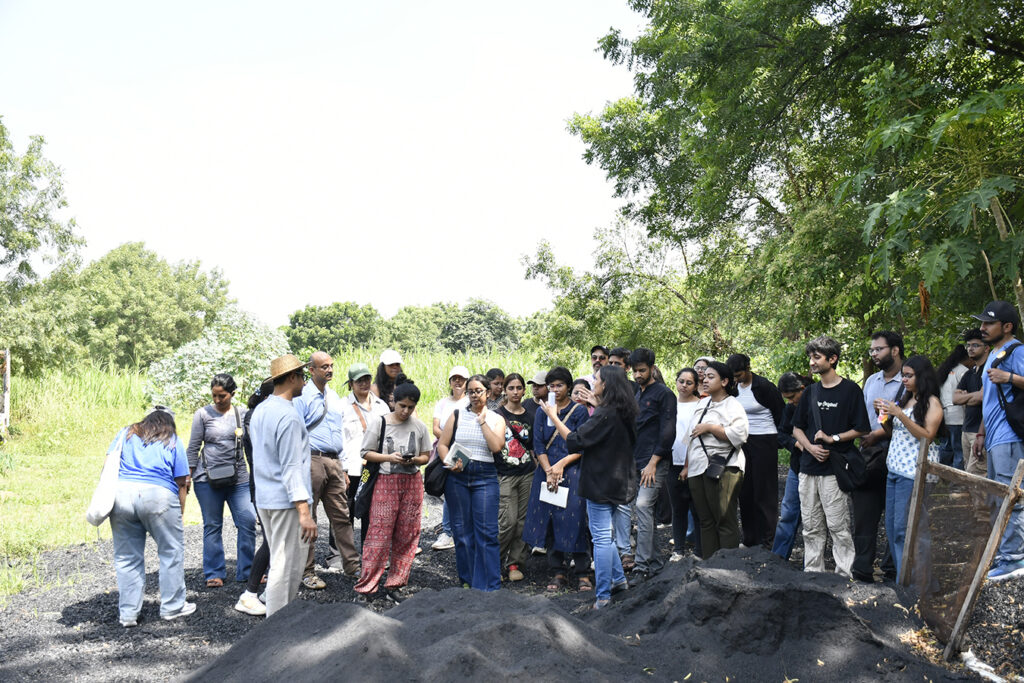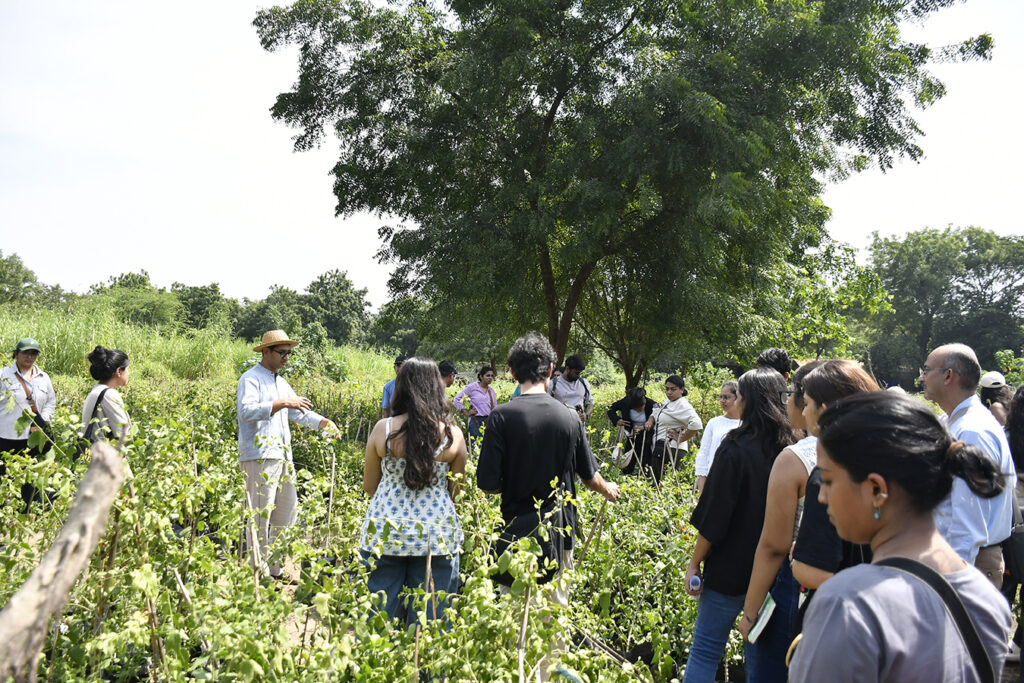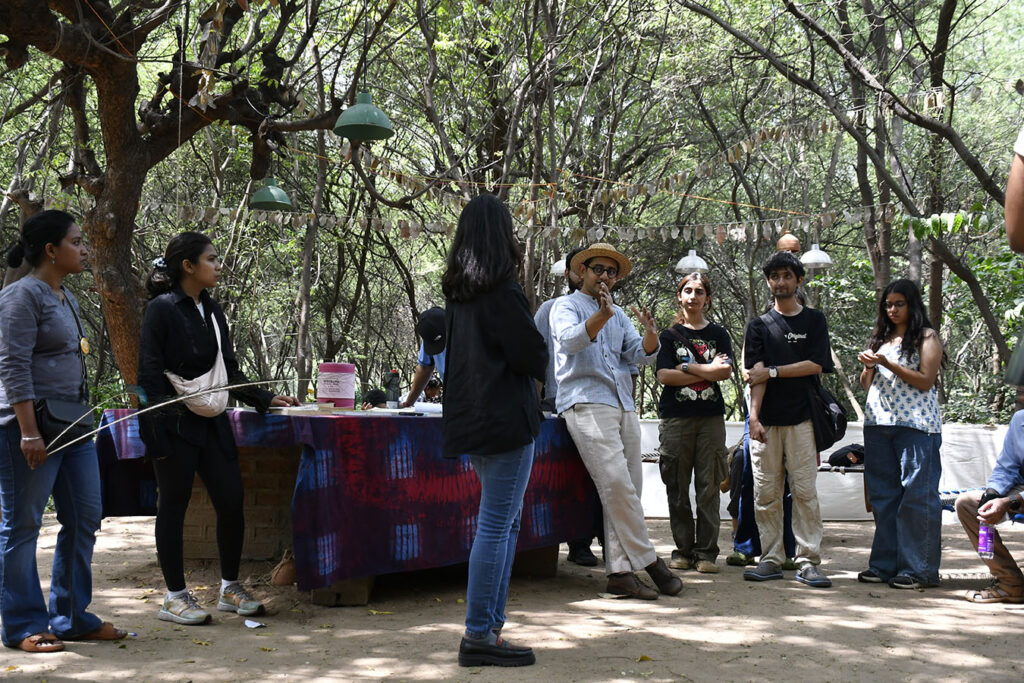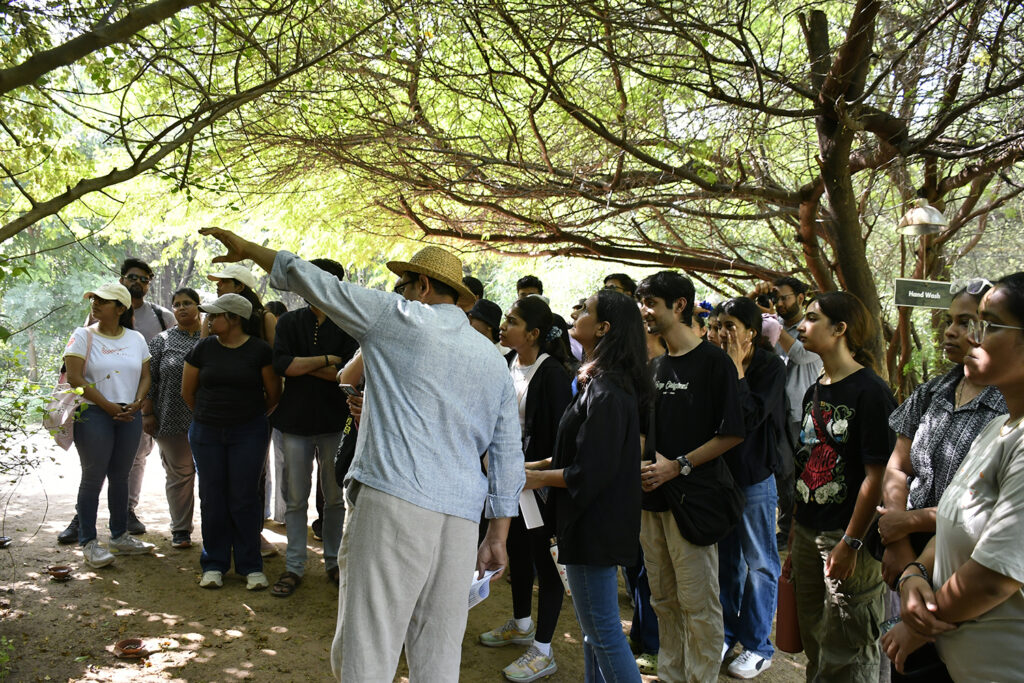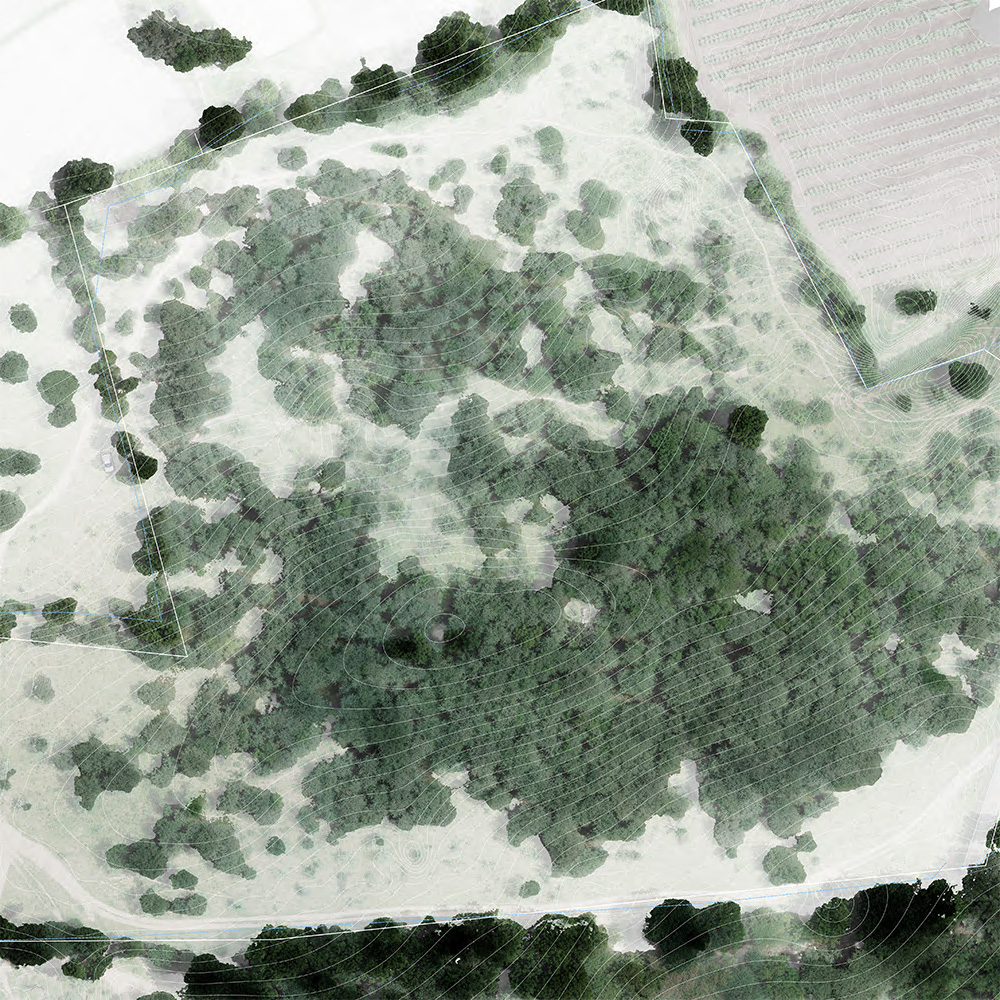
Hidimbavan is envisioned as a threefold project: an experimental laboratory for testing and refining regenerative land management; a demonstration site that reveals the potential of degraded or vacant land when guided by ecological design; and a living repository that safeguards species and practices for the future. Situated within the eco-sensitive zone of Thol Lake Sanctuary, Hidimbavan takes its name from the mythological forest lair of Hidimb. It recalls the semi-arid scrub and deciduous forests once native to this region, re-imagined here as an adaptive, evolving ecology.
Over five hundred native and naturalized species have been established on the site, spanning timber, edible, medicinal, and ecologically significant varieties. These are assembled into interdependent plant communities: legumes fixing nitrogen and restoring fertility; mulching trees enriching the soil with carbon; deep-rooted mineral accumulators drawing nutrients upward; pollinator species sustaining insect life; and habitat-forming trees offer shelter to birds and animals.
At the centre is a specialized nursery where native, rare, and valuable species are propagated, grown, and distributed. Raised entirely through organic methods, these plants extend restoration beyond the boundaries of the site. Hydrology is equally central. The land yields no runoff: swales, earth berms, and percolation ponds capture every drop of rainfall, recharging aquifers and stabilizing the water table. Once depleted and nutrient-poor, the soil has been transformed into a living substrate capable of sustaining forest growth.
Hidimbavan seeks to redefine land use, strengthen food and water security, and contribute to the wider restoration of Thol. Rooted in permaculture ethics and strategies for long-term resilience, it stands as both a forest in the making and a centre of ecological awareness, a place where experimentation, conservation, and regeneration converge.